Amazon Product Research Tools: Choose the Right Tool for Your Sourcing Model
Updated July 12, 2026
Product research is not one task. A private-label seller studying a niche, an online arbitrage seller checking a retail listing, and a wholesaler reviewing a distributor catalog all need different answers.
The right tool starts with the format of the opportunity in front of you. It should then help you validate the exact product, understand the downside, and decide what to do next.
Quick answer
Choose Amazon product research software based on your starting point. Use niche research when you are developing a new product, browser tools when you are checking individual retail deals, and bulk catalog analysis when a supplier sends hundreds or thousands of products.
How to Choose
Before adding another subscription, make sure the tool passes these practical checks.
- The tool matches your sourcing model and input format.
- It separates current price from historical price behavior.
- It includes the fees and costs that affect your real margin.
- It helps verify the correct product and variation.
- It shows competition and restriction risks before you buy.
- It supports quick rejection, not just exciting opportunity scores.
Start With Your Sourcing Model
Private-label research starts with customer demand and market gaps. Amazon's Product Opportunity Explorer is useful for exploring niches, search behavior, purchasing patterns, reviews, and return activity.
Wholesale research starts with a supplier relationship and a price list. The job is to match identifiers, compare supplier cost with Amazon economics, and remove products that fail the seller's rules. Online arbitrage sits between the two: sellers usually validate one retail deal at a time while browsing.
Niche and Demand Research
Niche tools help sellers understand customer demand, search terms, competition, seasonality, and gaps in the market. They are most useful before choosing or developing a product, rather than after a wholesaler receives a fixed catalog.
Treat demand estimates as direction, not a guarantee. A promising niche can still fail because of manufacturing cost, advertising cost, weak differentiation, or operational complexity.
Single-Product Validation
When you already have an ASIN or product page, focus on the exact listing. Check the current offer, historical pricing, estimated fees, competition, restrictions, variation, and whether the margin survives a less favorable sale price.
Single-product tools are useful for spot checks. They become inefficient when the same process must be repeated across a large spreadsheet.

Bulk Supplier Catalog Research
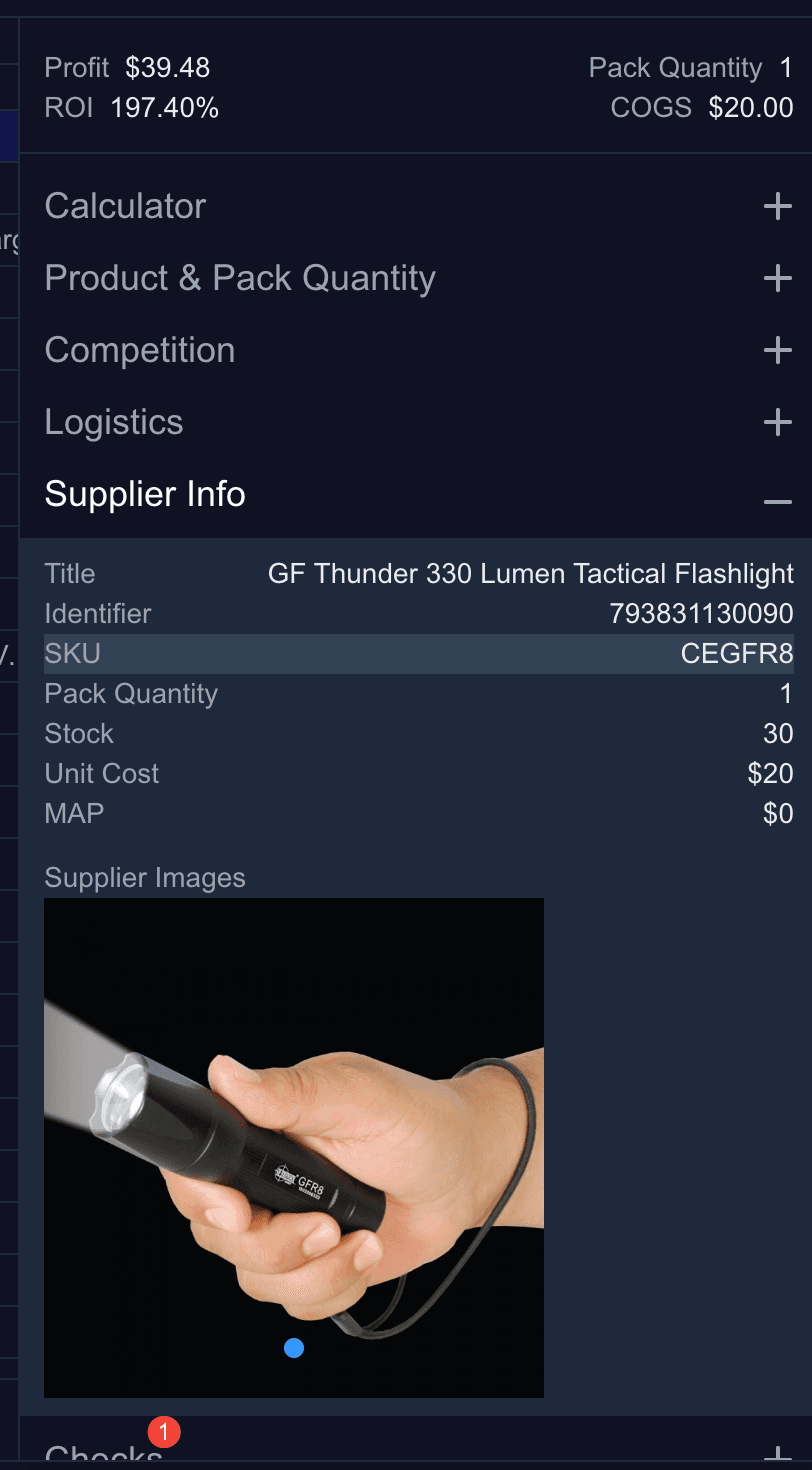
A wholesale catalog may contain thousands of rows, duplicate identifiers, products that do not match cleanly, and costs in several formats. The first pass should be consistent and fast: match products, calculate economics, apply exclusion rules, and create a shortlist for human review.
Rocket Source is designed around that workflow. It keeps every input row, so sellers can compare the same ASIN from different suppliers or at different costs instead of losing valid offers during deduplication.
- Map the supplier identifier to the correct Amazon listing.
- Calculate fees, profit, margin, and ROI from the supplier cost.
- Review historical pricing data instead of trusting one current price.
- Apply brand, category, and product-level rules.
- Export the shortlist with the original supplier context intact.
The Checks That Matter Before You Buy
Good research looks for reasons not to buy. Confirm the listing match, model a lower sale price, include inbound and prep costs, check whether demand is seasonal, and make sure one dominant seller is not controlling the offer.
A tool that produces a large opportunity list without showing the assumptions behind it creates more review work, not less. Prefer clear calculations and filters you can explain.
Build a Research Workflow, Not a Dashboard Collection
The best workflow moves from discovery to validation to action. Niche research should produce products to investigate. Product checks should produce a buy, reject, or watch decision. Bulk analysis should produce a shortlist that still contains the supplier data needed to place an order.
If you repeatedly copy the same identifier and cost between tools, the stack is not connected enough. Fix the handoff before adding another dashboard.
Turn a Supplier Catalog Into a Shortlist
Rocket Source matches supplier identifiers to Amazon listings, calculates profit and ROI, adds historical pricing context, and helps you filter large catalogs without checking every row by hand.
Compare Rocket Source plansRelated Guides and Tools
- Amazon price tracker for sellers
- Analyze Amazon wishlist products for resale
- Best Amazon seller tools
- Amazon Buy Box for wholesale sellers
- Effective product sourcing strategies
- How to find Amazon wholesale suppliers
- Free UPC to ASIN converter
Official Amazon Resources
FAQ
What is an Amazon product research tool?
An Amazon product research tool helps sellers evaluate demand, competition, price behavior, fees, and product-level risk before launching or buying inventory. The right data depends on whether the seller uses private label, wholesale, retail arbitrage, or online arbitrage.
What is the best product research tool for Amazon wholesale?
Wholesale sellers benefit most from bulk catalog analysis that matches supplier identifiers to Amazon listings and calculates profit across every row. Single-product extensions are useful for deeper review after the catalog has been narrowed down.
Can I research Amazon products for free?
Yes. Amazon provides several seller tools, and free price-history checkers, identifier converters, and fee calculators can support individual product checks. Paid tools become valuable when you need more depth or bulk processing.
Which product research metrics matter most?
Start with listing accuracy, sale-price stability, fees, net profit, ROI, competition, restrictions, and demand consistency. No single score should replace checking the assumptions behind the deal.