Amazon Price Drops and Sourcing Risk: Protect Your Margin
Updated July 20, 2026
Price drops hurt most when they happen after you place an order. The product may still sell, but a smaller margin ties up cash for less return and leaves less room for fees, storage, or another competitive move.
The goal is not to avoid every product with a changing price. It is to understand how far the price can move before the deal stops meeting your minimum profit and ROI.
Quick answer
A price drop is a warning to investigate, not automatic proof that a product is bad. Check whether the change is brief or repeated, compare the new price with your break-even point, review offer competition and stock conditions, and reduce or reject the order when the downside no longer fits your rules.
Practical checks
Before using price history to make a sourcing decision, make sure these points are covered.
- The exact listing and pack quantity are confirmed.
- Your full landed cost is known.
- Break-even and minimum acceptable prices are calculated.
- Repeated lows are distinguished from isolated promotions.
- Order size reflects the downside scenario.
- Restrictions and listing risks are checked separately.
Common Reasons a Price Can Fall
A lower price can follow new inventory, more competing offers, a promotion, a seller clearing stock, a variation mismatch, or ordinary seasonal movement. The chart alone does not tell you which explanation is correct.
Review the listing and offer context before reacting. A one-day promotion and a three-month downward trend create different sourcing risks.
- More sellers or inventory entering the offer
- Automated repricing within seller-defined limits
- Temporary coupons or promotions
- Seasonal demand ending
- A previous stock shortage resolving
- Incorrect variation or pack-quantity matching
Calculate the Price That Breaks the Deal
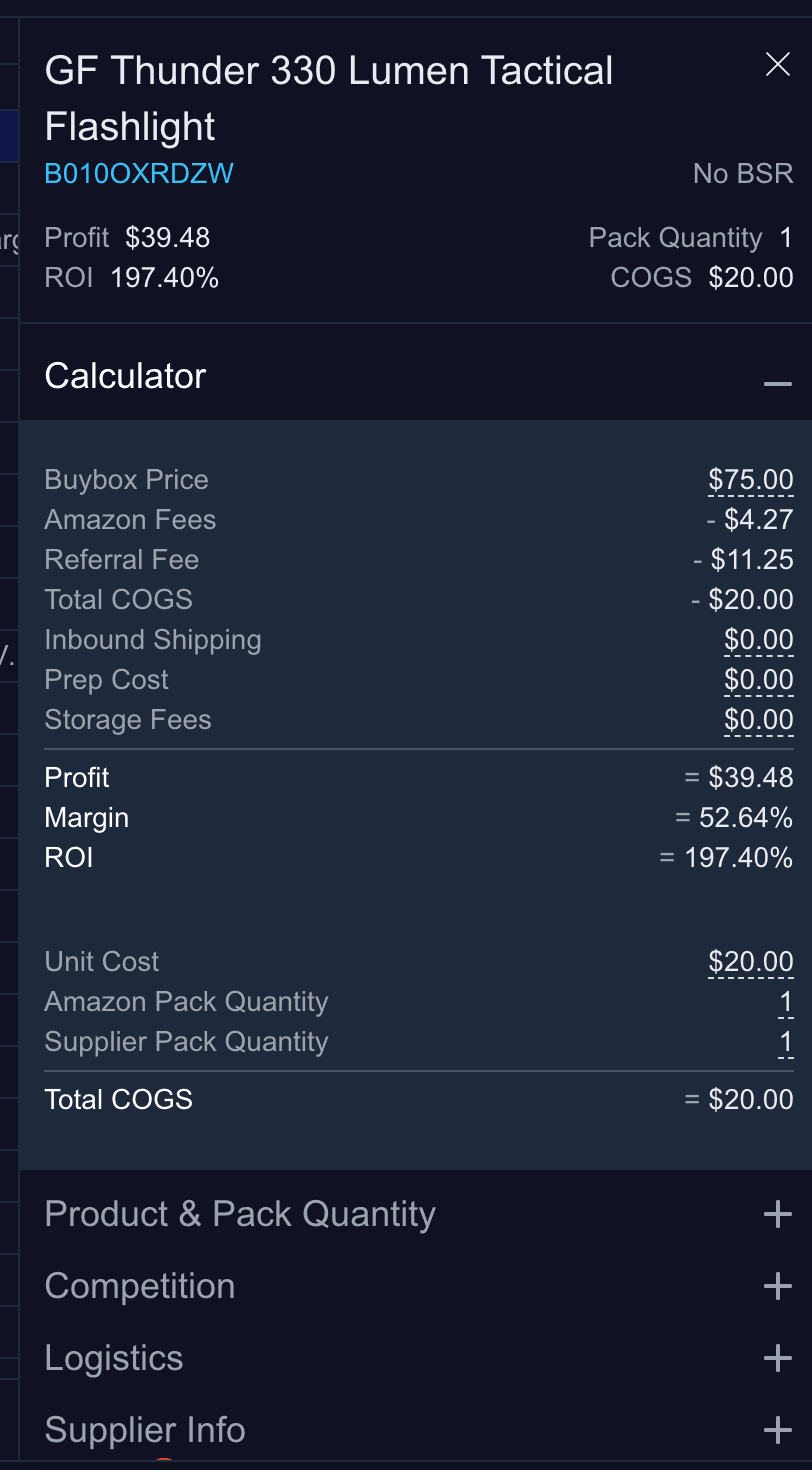
Start with landed cost and all expected selling costs. Calculate the selling price that produces zero profit, then calculate the price needed for your minimum profit and ROI.
Compare both thresholds with the recent historical range. If ordinary price movement regularly crosses your minimum, the deal needs a lower cost or a smaller order even if today's margin looks strong.
Match Order Size to Price Risk
A product with a wide or declining range may still be worth testing at a small quantity. The same product can be a poor choice for a large order that takes months to sell through.
Use conservative prices for the first pass, then reserve deeper research for rows that still meet your thresholds. Record the price assumption used so the buying decision can be reviewed later.

Apply Price Context Across a Supplier File
Rocket Source matches identifiers to Amazon listings, calculates profit and ROI, and helps you apply conservative price assumptions consistently across large catalogs.
Compare Rocket Source plansRelated Guides and Tools
- Amazon price history checker
- Amazon price tracker guide for sellers
- How to read Amazon price history
- FBA profit calculator
- Amazon seller fees
- Amazon gated brands and categories
Official Resources
FAQ
Why do Amazon prices drop suddenly?
Possible causes include new competition, inventory changes, promotions, repricing rules, seasonal demand, or a previous shortage ending. Investigate the listing rather than assuming one cause from the chart alone.
Should I avoid every product with price drops?
No. Decide whether the normal downside still meets your minimum profit and ROI, and match the order size to the risk and expected sell-through time.
What price should I use for sourcing calculations?
Use a conservative price supported by the product's recent range. Test the deal at the average and meaningful recent lows instead of relying only on the current high.